
How social green are you? – Book
Gerlinde Schuller
Currently I am working on a book about Social Green that argues that only combining social justice and ecological awareness can solve the climate crisis. Covering 1493 to 2135, the book tells the story of social green developments, starting with the first European colony in South America on Hispaniola – a low point in European social and ecological history, marking the domination of people and nature.
A photo-docu-novel, non-fiction, with more than 700 images
15 x 21 cm, ca. 340 pages, English and Dutch version
nai010 publishers, march 2027
Pre-order my book
Take a look at my crowdfunding- and pre-order campaign: How social green are you? that has been successfully completed, and read here why people supported it.
If you would still like to pre-order a copy of my book, please contact me at: studio@theworldasflatland.net
Spanning several centuries and envisioning future perspectives, the book explores the delicate balance between social and environmental factors in urban development – a balance that could help address a crucial dilemma we face today: should we prioritize economic growth to improve the political climate, or focus on the rights of nature to address the climate crisis? What is the middle ground that could unite both interests? And equally important, how can everyone contribute, even with small actions?
The term ‘Social Green’
I coined the term Social Green during my historical research on the Geuzenhof housing complex in Amsterdam, where I live, because it was deeply embedded in the mindset of its developers. I also found it fitting to introduce the adjective social green to emphasize the active, intentional engagement that characterizes this mindset.
More than a concept, being social green is an attitude that can positively influence decisions in politics, urban planning, housing, landscape design, jurisprudence, and our daily lives. Our social green competencies also shape our relationship with nature: the space we allocate to it and the degree to which we control it.
While green spaces – and with them, biodiversity – are increasingly vanishing due to human activity, it is precisely within these areas that a crucial part of the solution to the climate crisis lies. This is a highly relevant issue that calls for widespread public dialogue and demands an interdisciplinary approach. I aim to engage readers with a personal and direct tone to raise awareness that everyone can be part of the solution.
Therefore, the book also documents my personal journey to become more social-green, with the aim of inspiring others to do the same.
Geuzenhof Amsterdam as case study – developed by Huibert van Saane, Mien Ruys…
The social green history of the Geuzenhof housing complex, where I live, serves as a case study and highlighting a range of key topics: urban expansion, social housing, the garden city philosophy, resident participation, the preservation of architectural and green heritage, and our relationship with nature.
At the beginning of Geuzenhof stood a collaboration of well-known creative and socially engaged personalities, including urban planners Cornelis van Eesteren and Jakoba Mulder, building contractor Huibert van Saane, architects Jacob Dunnebier and Johannes F. Berghoef, garden architect Mien Ruys, and industrial designer Piet Zwart. Inspired by the early-20th-century garden city concept, which aimed to establish ‘social cities,’ they created an exemplary neighborhood in Amsterdam.
Discussing the future of Social Green
Through interviews with the developers’ families, (former) residents, and international experts visiting Geuzenhof, I explore the concept and future of Social Green – weaving together personal and intergenerational stories while broadening the perspective to include global developments.
Among the experts with whom I discuss Social Green are gardening icon and BBC presenter Monty Don, writer Suzanna Jansen, artist Natascha Hagenbeek, social entrepreneur Ama Koranteng-Kumi, politician Melanie van der Horst, social geographer Sjaan van der Tol, activist Iris Poels, social scientist Cemil Yilmaz, artist Jonmar van Vlijmen, landscape architect Maike van Stiphout, social psychologist Ioana Biris, fashion designer Bonne Reijn, climate coach Karin Stoevenbeld, garden designer Julia Crawford, researcher Daphina Misiedjan, anthropologist Rukayyah Reichling and others.
Photo-docu-novel
The book is set to be a visual and accessible narrative in the form of a photo-docu-novel, featuring more than 700 historical images, my own photography and data visualizations.
As an information designer and data journalist, I will research and design the book myself.
Follow my research project on Instagram
The research for the book is made possible with support from Fonds Bijzondere Journalistieke Projecten, Van Eesteren-Fluck & Van Lohuizen Stichting, Iona Stichting, Jaap Harten Fonds and Huibert van Saane Stichting.

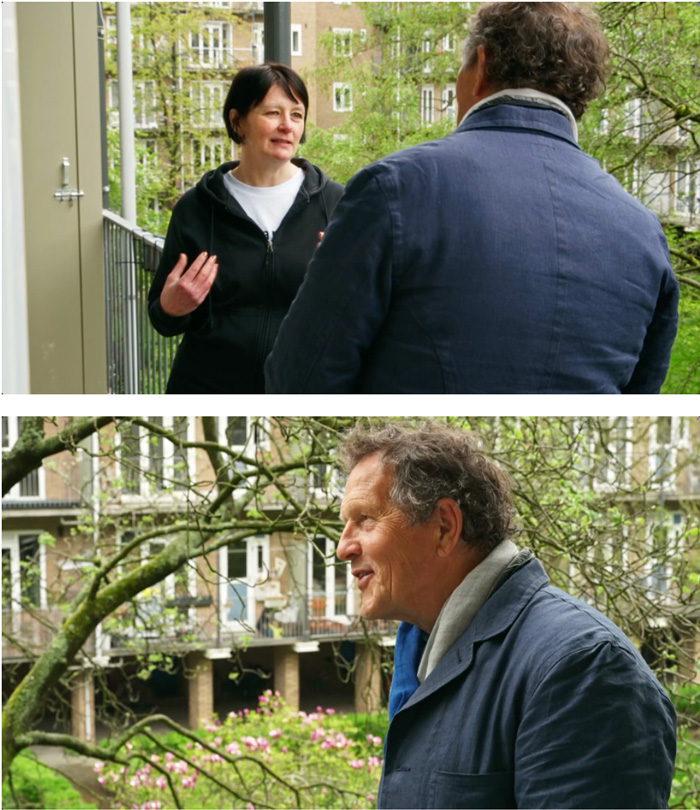
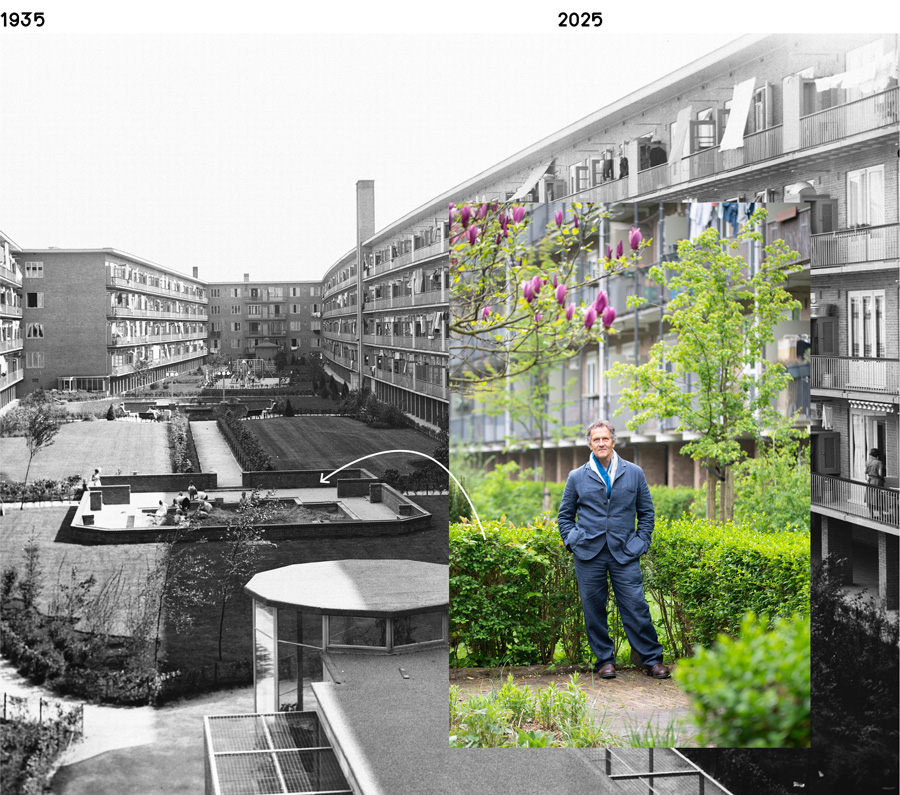
I introduced gardening icon and BBC presenter Monty Don to the Social Green concept of the Geuzenhof during his visit to Amsterdam.
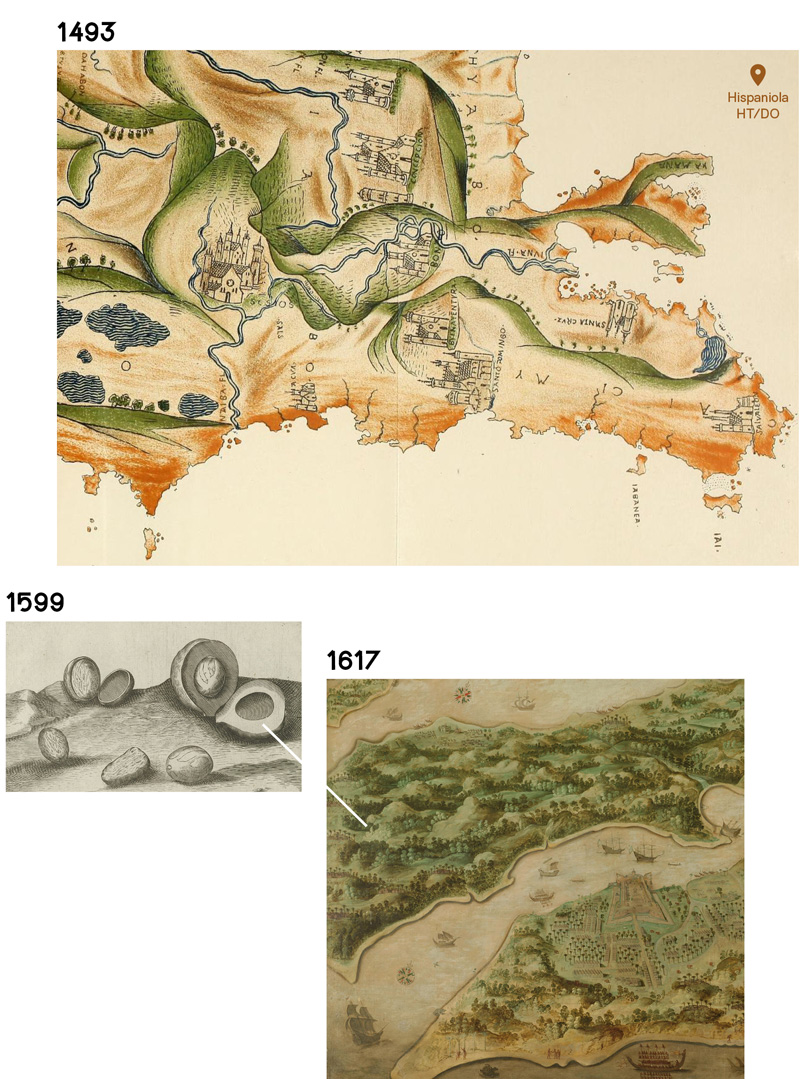
which was seized by the Dutch East India Company due to the lucrative clove production.
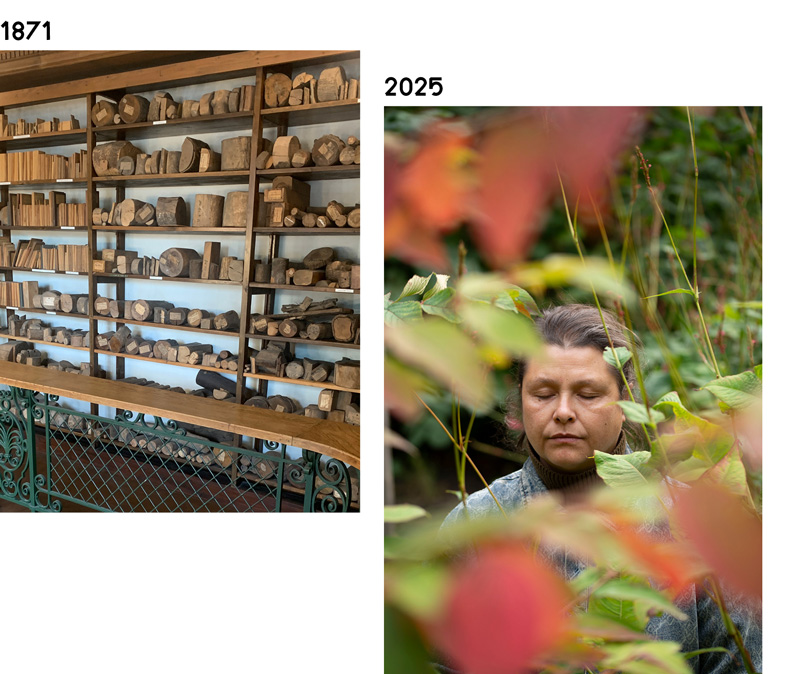
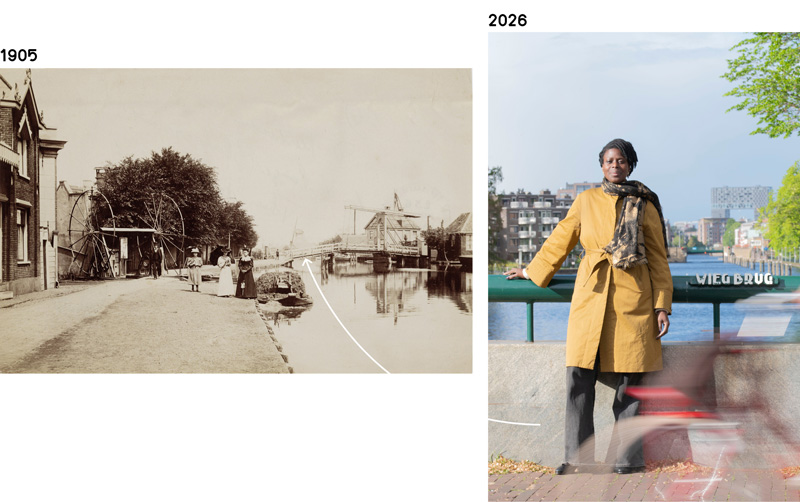
She stands on the Wiegbrug, next to the Geuzenhof, with the luxury residential tower Pontsteiger in the background,
symbolising the shift from a social, affordable housing market to a more capital-intensive city.
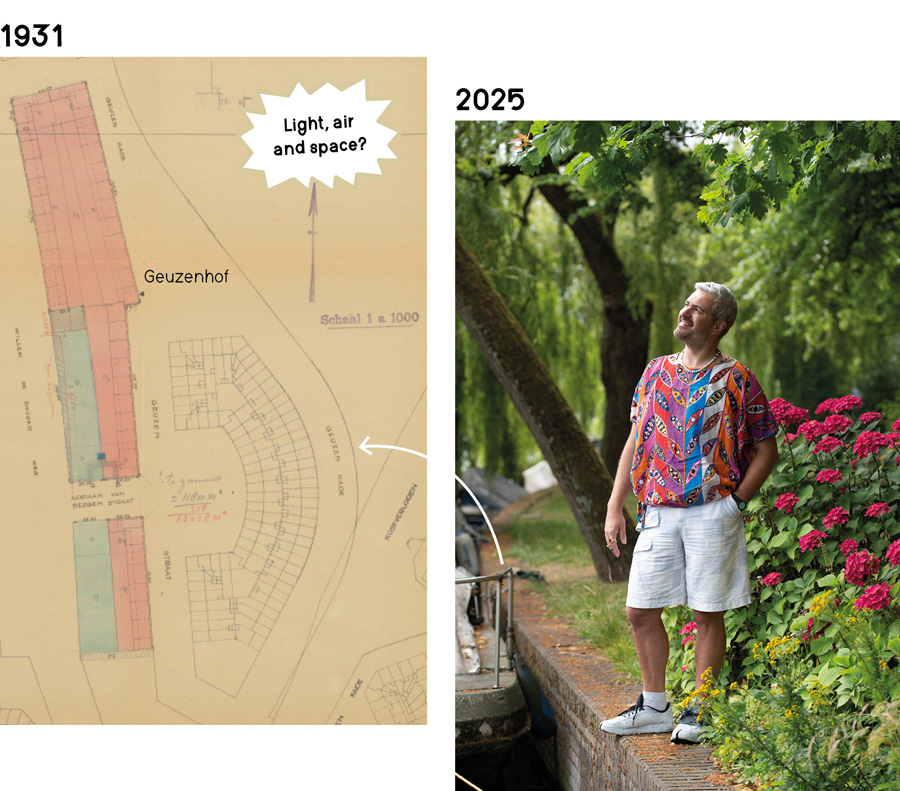
I spoke with him about how, as a contemporary successor to urban planners Cornelis van Eesteren and Jakoba Mulder, he redefines their philosophy of “light, air and space.”
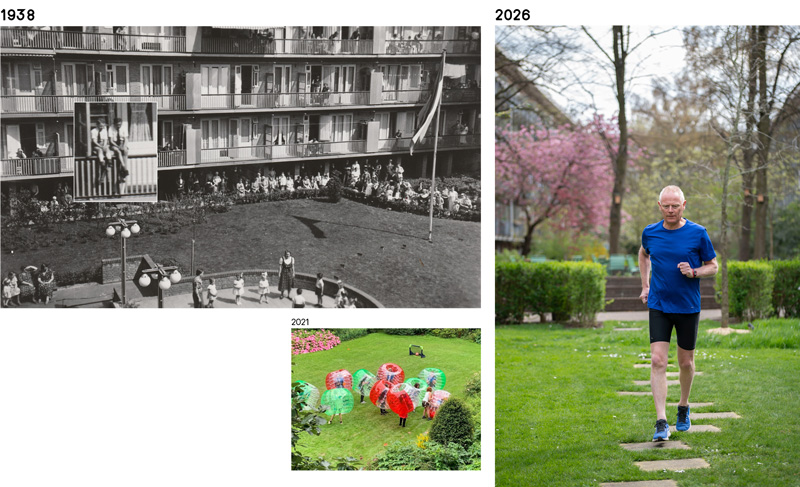
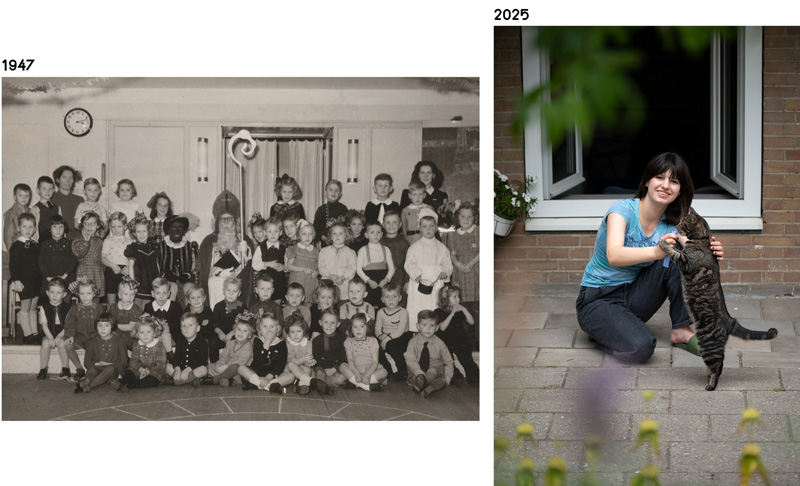
Sometimes he even dressed up as St Nicholas himself to surprise them. Later, the former nursery school became an apartment, now the home of Mia and Jip.
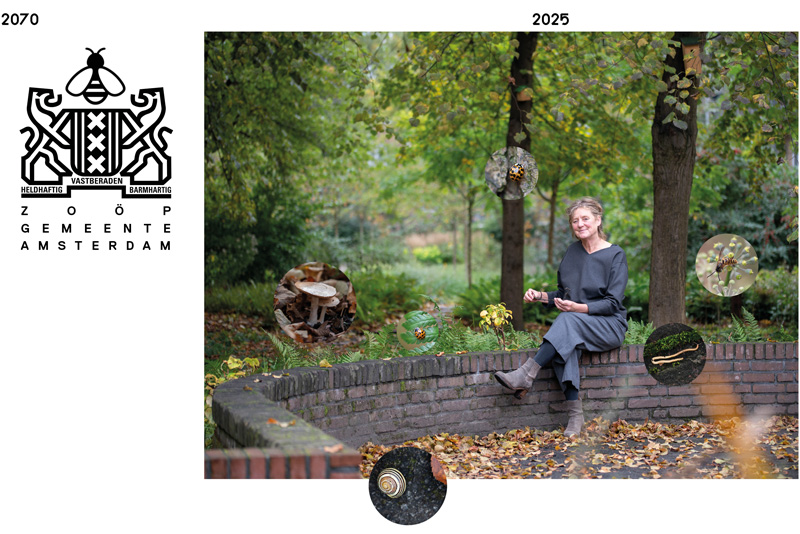
With landscape architect Maike van Stiphout, the world’s first Speaker for the Living, I brainstormed about Amsterdam as a zoöp:
an organization that represents the interests of all living beings within its decision-making.
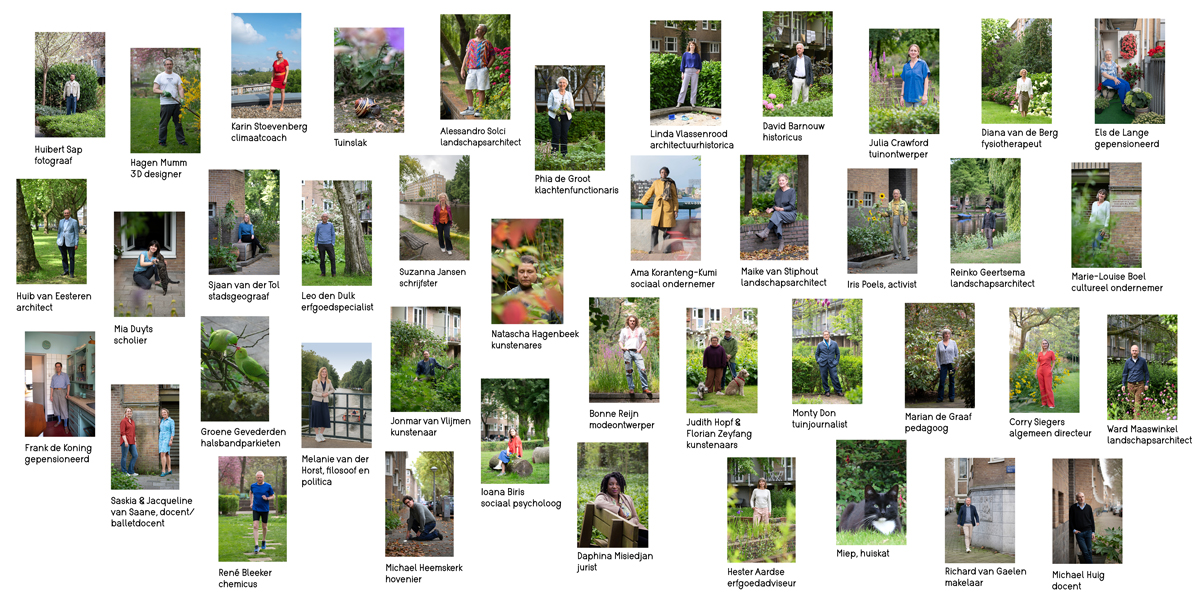
Also many (former) residents of the Geuzenhof actively contribute to the book and are part of the story.